A Ottoman Heritage Defying Time in Mytilene
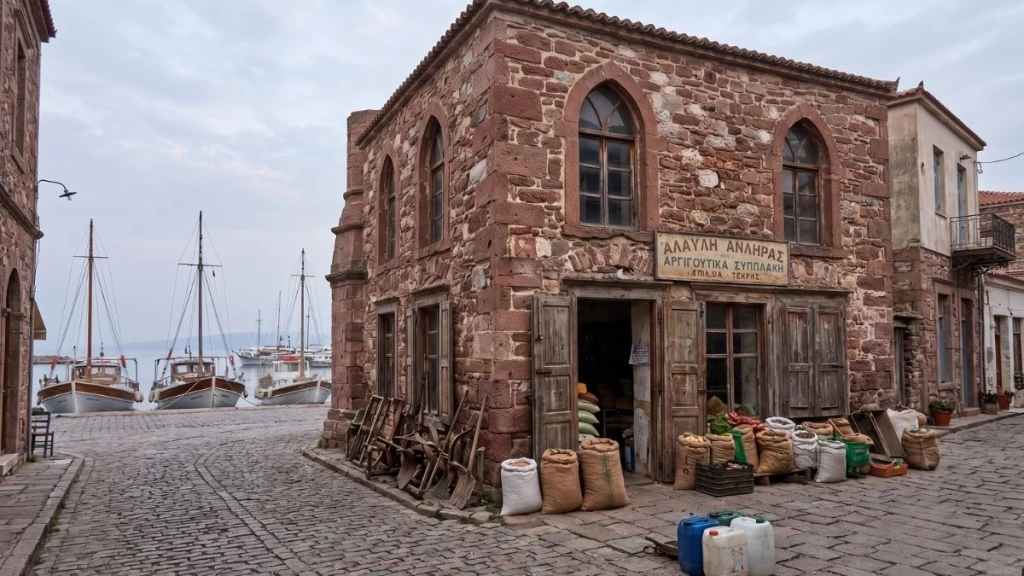
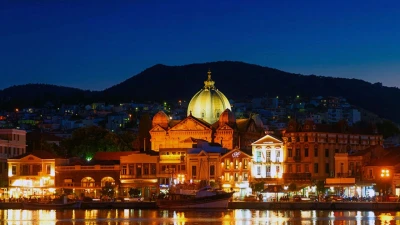
While wandering through the lively streets of Lesbos Island, there is a building that most visitors pass by without noticing. At first glance, this structure seems like an old warehouse or an ordinary shop, but in fact it is one of the silent witnesses of a centuries-old shared history that connects the two shores of the Aegean. Today, this building, used as a business selling agricultural supplies, is the Yalı Mosque, which has survived from the Ottoman era to the present day.
Located in the historic neighborhood of Epano Skala on the northern harbor of Lesbos, Yalı Mosque is an important cultural heritage site that has witnessed the daily life of Ottoman sailors, merchants, soldiers, and the island’s residents.
🕌 From the Conquest by Mehmed the Conqueror to the Present Day
When Lesbos Island was conquered by Mehmed the Conqueror in 1462, the island became one of the most important centers of the Ottoman Empire in the Aegean. Thanks to trade routes developing between Istanbul, Izmir, and Alexandria, Lesbos quickly turned into a major port city.
In particular, the Epano Skala area, where Yalı Mosque stands today, developed during the Ottoman period as the city’s commercial center and Turkish quarter. At that time, the area was a lively Ottoman settlement that housed:
- Mosques and Madrasas
- Historic Baths
- Caravanserais and Bazaars
- Busy Port Facilities
On the streets where tourists walk today, Ottoman Turkish, Greek, and various other Mediterranean languages could once be heard together.
🌊 Why Does Yalı Mosque Bear This Name?
In Ottoman Turkish, the word “Yalı” means by the seashore. Since the mosque is located very close to Lesbos’s northern harbor and coastal road, it came to be known among the public as “Yalı Mosque.” Because it was one of the first religious buildings seen by ships arriving from the sea, it also holds an important place in the island’s maritime history.
In Greek sources, the structure is also referred to by the following names:
- Γιαλί Τζαμί (Yali Tzami)
- Sea Mosque
- Baloglu Mosque
- Hasan Pasha Mosque
🏛️ An Earthquake, a Rebirth, and Architectural Traces
Ottoman inscriptions and archival records examined by Greek researchers indicate that there was an earlier mosque in the area. The Ottoman inscriptions at the entrance of the present building mention an older structure dating to 1738 and a renovation carried out in 1901–1902. Experts believe that the structure seen today was largely rebuilt after the major earthquake that devastated Lesbos in 1867.
One of the most striking features of Yalı Mosque is the materials used in its construction. Greek studies note that the building used stones brought from the Ayvalık region, Sarımsak stone, and Northern Aegean bricks. This shows that the historical ties between Lesbos and the Ayvalık-Dikili line are reflected even in its architecture. Today, the pointed arched windows, stone corners, and symmetrical form characteristic of Ottoman architecture can still be seen on the façade.
🕰️ Post-Exchange Silence and a Lost Neighborhood
The 1922 Asia Minor Catastrophe and the subsequent population exchange between Greece and Turkey completely changed the demographic structure of Lesbos. The Muslim Turkish population that had lived on the island for centuries migrated to Anatolia.
As a result:
- The mosques were left empty and the endowment incomes ceased.
- Many Ottoman buildings began to be used for different purposes.
Yalı Mosque was also affected by this process. It first became temporary shelter for refugees. Later, it was used successively as a butcher shop, a warehouse, a commercial property, and today as a shop selling agricultural products. It still remains in private ownership.
The Epano Skala where Yalı Mosque stands was Lesbos’s Turkish quarter during the Ottoman period. Today, while walking through the area, it is possible to see many traces such as Valide Mosque, Yeni Mosque, Ottoman baths, old Turkish houses, and historic fountains. However, most of these have been lost or transformed over time. For this reason, Yalı Mosque is not just a building, but one of the last witnesses of a vanished neighborhood.
🕊️ A Silent Witness to Shared History
The story of Yalı Mosque is not merely the story of a mosque. Within its walls, this structure carries the Ottoman rise in the Aegean, the period when Lesbos was a commercial center, the great earthquake, the population exchange, and the shared past of the Turkish and Greek peoples.
Today, most visitors who pass by do not realize this. But when looked at carefully, among the old stones one can see not just a building, but a centuries-old history linking the two shores of the Aegean.
🌟 If You Go to Lesbos, Be Sure to See It
During your trip to Lesbos, try to discover not only the tavernas, beaches, and narrow streets, but also the island’s multicultural past. Yalı Mosque is perhaps one of the least known yet most meaningful historical structures on Lesbos.
It is silent. It is not flashy. Yet the story it tells still lives in the shared memory of the two shores of the Aegean. If one day you are walking along the northern harbor of Lesbos and stop in front of this old building, remember that you are looking not just at a shop, but at a history spanning hundreds of years.