The New Cultural Route of Mountainous Lesvos:
Ampeliko Resin Museum and Medieval Tower
Lesvos’ pine forests, a nearly forgotten resin-tapping tradition, and a stone tower that has stood for centuries come together in the same village.
A very different side of Lesvos, far from the sea
When Lesvos is mentioned, places like the stone houses of Molyvos, the ouzo culture of Plomari, the beach of Petra, and the lively harbor of Mytilene usually come to mind. Yet the true character of the island is found not only on its coasts, but also in its mountain villages surrounded by pine forests, its old production traditions, and the stone structures that have stood for centuries.
One of these villages, Ampeliko, came back into the spotlight in July 2026 with two important cultural projects. The renovated Ampeliko Resin Museum and the restored Medieval Tower were opened to visitors in a ceremony attended by Greece’s Minister of Culture, Lina Mendoni. In this way, the village’s modern labor culture and its medieval heritage were brought together on the same cultural route.
Ampeliko, beyond classic beach tourism, is one of Lesvos’ most distinctive destinations for those who want to explore history, nature, village life, and local production culture together.
Where is Ampeliko?
Ampeliko is a traditional mountain village in the south of Lesvos, built on the western slopes of Mount Olympos. Located at an altitude of about 354 meters, the village is approximately 38 kilometers from Mytilene and about 20 kilometers from Plomari. Thanks to this location, it forms a natural cultural route that can be planned together with Agiasos, Plomari, Polichnitos, and the southern villages of Lesvos.
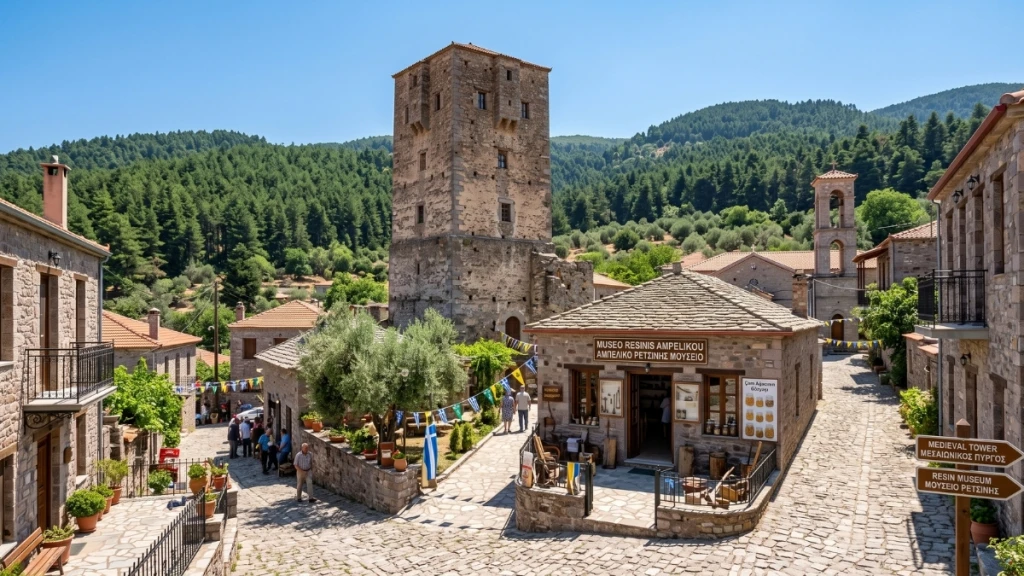
With its stone houses, narrow streets, surrounding pine forests, and peaceful atmosphere, Ampeliko offers visitors a different experience for those who want to step away from crowded tourist centers and feel the local life of Lesvos.
Ampeliko Resin Museum: a memory space dedicated to the “tears of the pine tree”
The Ampeliko Resin Museum was first founded in 1995. The museum operates in a building in the courtyard of the village’s Church of Saint Nicholas. Priest Efstratios Kakampouras and the people of Ampeliko made significant contributions to its establishment.
The museum is not just a small exhibition space about resin production. It is more like a comprehensive village museum documenting Ampeliko’s everyday life, traditional occupations, religious culture, and local history together.
What can be seen in the museum?
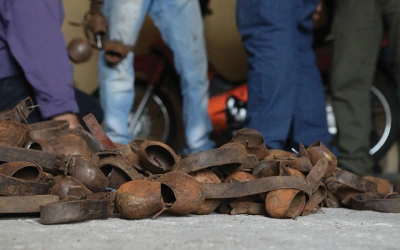
- Cutting, scraping, and collecting tools used by resin workers
- Resin containers placed on pine trunks
- Items related to the daily life of resin collectors in the forest
- Old and rare photographs of resin tapping
- Archives of the Ampeliko Resin Cooperative from the period 1929–1967
- Traditional agricultural tools, jars, millstones, and household items
- Musical instruments, clothes, religious objects, and old books
According to information published by Visit Lesvos, the museum’s folklore collection includes approximately 1,660 objects. The resin collection is described as one of the most distinctive of its kind in Greece.
Why was resin tapping important for Lesvos?
Resin tapping was one of the main sources of livelihood for Ampeliko and the surrounding villages throughout much of the 20th century. Months of hard work in the pine forests was not only an economic activity; it was also a culture that shaped families, cooperatives, seasonal labor patterns, and village life.
Resin is secreted from controlled cuts made in the bark of the pine tree and collected in containers attached to the trunk. The natural material collected was used in the production of turpentine, paint, varnish, soap, adhesive, and various industrial products.
The museum’s greatest strength is that it presents resin not merely as a technical product, but together with human labor and life in the forest. For this reason, the phrase “the tears of the pine tree” used in the exhibition beautifully reflects the emotional dimension of resin tapping history as well.
The Resin Park: where the story continues in the forest
One of the most striking parts of an Ampeliko visit is the Resin Park, located about one kilometer outside the village. Reached by a walking path, this area allows visitors to see the traditional hut where resin workers stayed in the forest and the old storage arrangement where resin was temporarily kept.
When the museum and the Resin Park are visited together, it becomes easier to understand where and how the exhibited tools were used. In this way, the trip turns from a closed museum visit into an experiential route combining nature and culture.
Ampeliko Medieval Tower
The stone tower rising in the center of the village is Ampeliko’s most impressive symbol. Generally dated to the 15th or 16th century, the structure is considered an important part of Lesvos’ medieval defense and surveillance system.
There are different views regarding the tower’s origins. Some researchers associate it with the period of the Gattilusio family, of Genoese origin, which ruled Lesvos between 1355 and 1462, while some architectural details may indicate a later period. Although the exact date of construction is debated, the structure is the village’s oldest and most valuable monument.
What was the tower used for?
The tower is thought to have served primarily as a lookout, early warning, and defensive structure. From its location, the southern sea approach, the direction of Kalloni, and the passages around Agiasos could be monitored. It is said that when pirates or enemy threats were spotted, signals were sent with torches and markers from the surrounding high points.
Such towers were not built for military purposes alone. They were also part of a local security network protecting villages, agricultural land, production areas, and rural trade routes.
It has been brought back to life through restoration
The restoration carried out by the Ephorate of Antiquities of Lesvos aimed to strengthen the stone walls, eliminate structural risks, and preserve the tower’s original architecture. The restored tower was officially handed over to the public in July 2026.
Opening the renovated museum and the tower on the same day tells Ampeliko’s cultural story through two different time periods: the defensive heritage of the Middle Ages and the labor-production culture of the 20th century.
Why should Ampeliko be included in Lesvos tour programs?
It is different from the classic routes: It offers a calmer and more authentic Lesvos experience beyond popular centers like Molyvos, Petra, and Plomari.
History and nature are intertwined: The medieval tower, village architecture, pine forests, and the Resin Park can all be seen in the same area.
It tells the story of local life: The museum does not present a tourist decoration, but real village life, labor, and a nearly forgotten profession.
It is suitable for special interest groups: It is a strong stop for cultural tours, photography groups, hiking enthusiasts, school groups, and those interested in local production.
Recommended cultural route in southern Lesvos
- Agiasos: traditional market, Panagia Church, and pottery workshops
- Ampeliko: Resin Museum, Medieval Tower, and village walk
- Resin Park: short nature walk and resin-tapping area
- Polichnitos: traditional settlement and hot springs
- Plomari or Skala Polichnitou: food and seaside break
This route can be planned as a full-day program that shows Lesvos is not only an island of sea and entertainment, but also one with a strong rural culture, a history of production, and a rich architectural heritage.
Practical information before your visit
Address | Ampeliko, Lesvos 81200, Greece |
Museum phone | +30 22520 91287 |
Mobile contact | +30 697 288 1341 |
Distance to Mytilene | Approximately 38 km |
Distance to Plomari | Approximately 20 km |
Recommended visit duration | 1–1.5 hours for the museum and tower; 2–3 hours including the Resin Park |
Since visiting hours may vary depending on the period, it is recommended to contact the museum by phone before group visits.
A new destination for cultural tourism in Lesvos
The Ampeliko Resin Museum and the restored Medieval Tower bring to light the great cultural heritage of a small mountain village. On one side, the labor of resin workers in the pine forests; on the other, a stone tower that watched over the village for centuries... Ampeliko does not merely exhibit Lesvos’ past; it gives visitors the opportunity to walk within that past.
For those who have visited Lesvos before, or for those who want to explore beyond the island’s crowded tourist centers, Ampeliko is a new and compelling alternative. Rich in history, nature, local life, and photography opportunities, this route is set to become one of the most remarkable cultural stops in mountainous Lesvos in the period ahead.
Discover not only the beaches of Lesvos, but also its villages, history, and living culture with GüvenTravel.
Frequently Asked Questions
Where is the Ampeliko Resin Museum?
The museum is located in the village of Ampeliko in southern Lesvos, in the courtyard of the Church of Saint Nicholas.
What is displayed in the museum?
Resin-tapping tools, old photographs, cooperative archives, agricultural and household items, religious objects, and traditional clothing are exhibited.
What period does Ampeliko Tower belong to?
The tower is generally dated to the 15th or 16th century. There are differing academic and local views regarding the exact date of construction.
Can Ampeliko be reached by car?
Yes. The village can be reached by road. Due to the mountainous route, careful driving and enough time should be planned.
Is Ampeliko suitable for families with children?
The village and museum are suitable for visits. Comfortable shoes are recommended for the walk to the Resin Park.
Sources
- Ministry of Culture of Greece - cultural projects and official announcements
- Visit Lesvos - Ampeliko village and Resin Museum information pages
- Lesvos Geopark - Ampeliko Museum and local cultural information
- Emprosnet - Green Cultural Routes of Southern Lesvos
- LesvosNews, SKAI, and Aeolos TV - July 2026 opening program and project information