The Magic of Winter in Lesvos: Apókries Carnival, Koudounatoi "Bell People," and Orthodox Easter (2026)
When we think of Lesvos, most of us associate it with summer: the sea, coves, sunsets, ouzo tables...
However, the real "character" of the island sometimes emerges in winter. The streets do not empty in the cold; rather, another rhythm begins: Apókries (carnival) followed immediately by Orthodox Easter.
In 2026, Lesvos had a clear goal:
"Let tourists come in winter; the island should not only come alive in summer."
To achieve this, the island's municipality, local communities, and content creators came together. A campaign focused on Reels/Shorts videos, municipality-supported live broadcasts, and the tag "Visit Lesvos Winter Events" emerged prominently.
In this article, I will tell you about the atmosphere of the events in 2026, especially focusing on Mesotopos’ legendary tradition of **Koudounatoi (Bell People)** in an informative way without being boring.
1) What is Apókries? (Lesvos Carnival - The Last Great Celebration of Winter)
Apókries is the carnival season that takes place before the fasting period leading up to Easter.
It is similar to the "carnival" concept in Turkey: costumes, street movements, music, satire, entertainment.
But in Lesvos, Apókries is not one-dimensional:
- In one place, there is political humor,
- in another, there is a seaside parade and night party,
- and in yet another, something "much older than entertainment": the village identity ritual.
In February 2026, three main highlights stood out:
✅ Mesotopos – Koudounatoi (Bell People)
- Bell processions
- Ritual dances within the village
- Traditional goat skin costumes
- Local music groups
✅ Agiasos Carnival
- Satirical parade
- Costumes themed on political humor
- Live stage performances
✅ Mytilini Seaside Parade
- School and NGO parades
- DJ stage
- Night party along the coast
This trio illustrates that Lesvos is not hosting "one single carnival"; each corner of the island brings its own character to the stage.
2) Carnival in Mesotopos: What It Is Not, What It Is
It is important to accurately describe the carnival in Mesotopos because many people place it in the wrong context at first glance.
What the carnival in Mesotopos is NOT
- Not just an "entertainment parade"
- Not just a "tourist show" (even if tourist interest increases, its essence is local)
- Not just an "event organized in the city center"
What the carnival in Mesotopos IS
- Local tradition that proclaims the coming of fertility and spring through sound
- A "identity ritual" lived within the village
- Also, a "community stage" that includes humor and satire
- (meaning: a hybrid of laughter + satire + ritual)
3) Koudounatoi: Who Are Lesvos' "Bell People"?
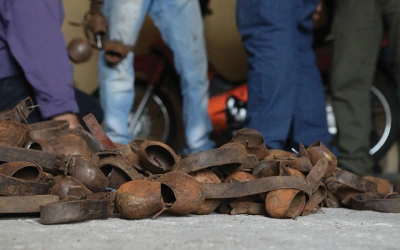
"Koudouni" means bell in Greek.
Koudounatoi refers to "those who carry bells."
In Mesotopos, this name describes the group on carnival day:
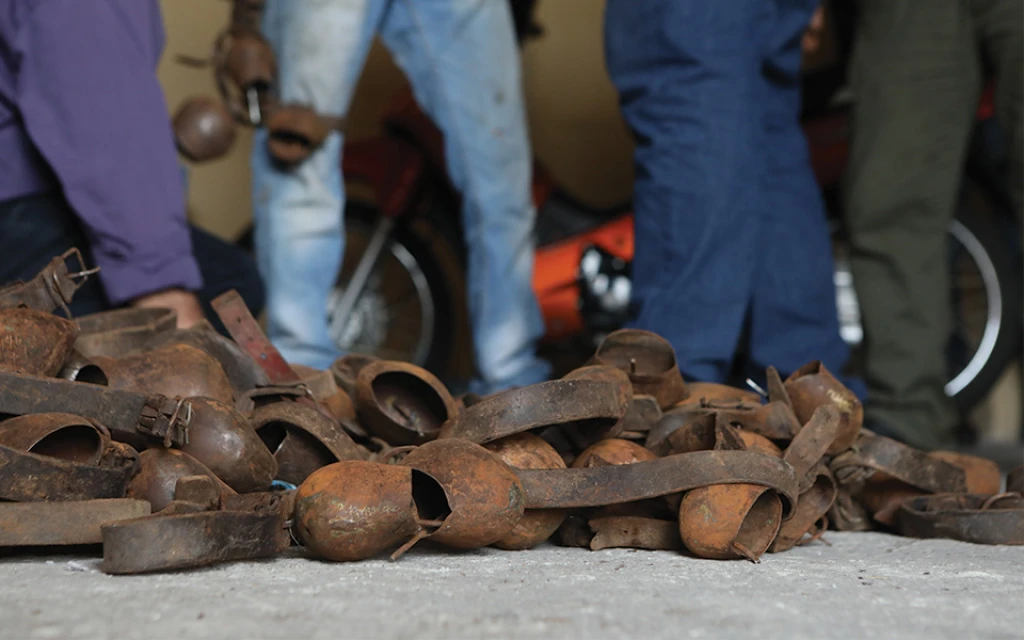
- those dressed in goat/sheep skins,
- with their faces blackened,
- carrying large bells strapped around their waists
- producing a sound that resonates through the village as they walk.
This image is striking even in a photo. Observing it live is even more intense:
The sound is not just "sound"; it carries a message.
4) Why Is It Done? (Roots - Meaning - Today's Function)
The significance of this tradition can be explained in two layers: Old function and current function.
A) Roots (ancient narrative)
Many interpretations suggest that the ritual carries "Dionysian" (fertility, nature cycle, arrival of spring) traces. The critical idea here is:
- Noise = drives away the bad
- Bell sound = awakens the land
- Roaming within the village = spreads fertility
In today's language, this resembles:
"A ceremony to activate nature before the new planting season."
B) Current function (new)
- Village identity: "Mesotopos = Koudounatoi"
- Winter season movement to the island: visitor flow + visibility
- Social media language: "bell sound + mask + crowd" aesthetics can go viral
5) The Language of the Ritual: Costume, Mask, Skin, Stick, and That Sound...
Everything on Koudounatoi is not "random"; it has a language:
- Skin: nature, animal strength, primitive/archaic energy
- Mask / face blackening: departure from everyday identity, "ritual persona"
- Stick / baton: rhythm, clearing space, order
- Belts: the heart of the ritual
Because at the center of this work is "sound."
What makes Koudounatoi Koudounatoi is the echoing of those bells like "a wall."
6) How the Mesotopos Tradition Evolves? (Old-New Balance)
The most evident trend in the narratives of 2026 is:
1) The "cultural heritage" framework is strengthening
The mentioning of this tradition in official frameworks such as "inventory of intangible cultural heritage" creates both protection and promotion effects.
There is a critical point in communication:
Some local news can headline it as "UNESCO."
In your blog/SEO text, you can say this more safely and accurately:
“Referenced/protected tradition within the national inventory of intangible cultural heritage.”
This expression is both strong and risk-free.
2) Mediatisation: Reels/TikTok aesthetics
Drone shots, short video rhythm, capturing the "moment"...
This increases the "spectacle value" of the event.
3) While the organization grows, the emphasis on "essence" persists
Typically, the local narratives include the spirit of this sentence:
"This is still something done by the villagers."
This fundamental difference makes Mesotopos not a "tourist show," but a "living tradition."
7) Easter in Lesvos (April 2026): A Celebration Bursting from Silence
If the Apókries carnival is a "noisy threshold," Easter is an "emotional peak."
The highlighted sequence in 2026 went as follows:
📅 April 9 – Holy Thursday
- Business closures in the afternoon
- "Last Supper" ceremony in churches
📅 April 10 – Holy Friday
- Epitaphios (the symbolic funeral procession of Christ)
- Street walks + hymns
📅 April 11 → 12 at midnight
- Candle ceremonies
- Fireworks in churchyards
- "Christos Anesti" celebration
📅 April 12 – Easter Sunday
- Turning lambs on the streets
- Tsoureki & red egg tradition
- Family tables + outdoor entertainment
On the media side in 2026, the following particularly stood out:
- Live streaming of ceremonies on social media
- Drone shots of nighttime fireworks
- Viral images of "Street Lamb Roast"
- Candle processions shining on YouTube Shorts
And an important breakthrough:
For the first time, the Lesvos Municipality moved with a more planned approach including English announcements and official content calendar.
8) Practical Guide for Visitors: "What Should I Do If I Go?"
Checklist for observing Mesotopos / Koudounatoi
- Sounds are very loud: ear protection is a good idea, especially for children
- Non-slip shoes: stone ground + crowd
- Go early: benefits of parking and good viewing points
- Set a meeting point: groups can scatter in the crowd
- Photo/video etiquette: maintain distance; do not touch anyone; be sensitive with children’s photography
For those making operational plans (from the perspective of tour organizers)
- Clarify and fix times with local announcements
- Plan for 2 fixed shooting points:
- narrow street crossings
- crowd concentrations in the square
- Food planning: reservations or packaged plans may work on busy days
9) Content Production / Correct Narrative Framework for Blog-SEO
The cleanest, safest, and strongest framework in this regard is:
- The word "pagan" can be used but never in a mocking/labeling way
- Use cultural language such as "Dionysian traces / fertility ritual themes"
- The phrase "inventory of intangible cultural heritage" is safe and strong
- If you're going to mention "UNESCO," make sure to position it as a claim of sources; do not write it as a definite judgment
Final Word: Seeing Lesvos in Winter Is Hearing the "True Sound" of the Island
When you walk in Lesvos during winter:
- on one side, the bells in Mesotopos awaken the earth,
- on another, satire spills into the streets of Agiasos,
- music extends the night on the Mytilini coast,
- and then in April, candles are lit, and the sound of "Christos Anesti" rises.
Lesvos is beautiful in summer...
But winter in Lesvos stays in memory.