CULTURE AND THEATRE BREEZE IN MYTILENE
The Play "Island of Slaves" and the Rising Cultural Tourism of Lesvos
Introduction
Lesvos Island is often defined for visitors from Turkey by the sea, tavernas, ouzo, historical villages, and a short getaway in the Aegean. However, the true identity of Lesvos is much broader. The island has been a strong cultural center for centuries, not only known for its natural beauty but also for its literature, music, theatre, local festivals, artist communities, and social life culture.
The play “Το Νησί των Σκλάβων” or “Island of Slaves,” staged in Mytilene in the spring of 2026, became one of the most striking examples of this cultural vibrancy. Pierre de Marivaux's classic social comedy was presented in Mytilene with a contemporary interpretation and reached the audience not only in Mytilene city center but also in various regions of the island.
In this article, we will discuss the cultural and artistic atmosphere of Mytilene through the lens of the “Island of Slaves” play, the local theatre movement, the event routes across the island, and why Lesvos is becoming increasingly valuable in terms of cultural tourism.
Mytilene is No Longer Just a Holiday Island
When traveling from Turkey to Mytilene, the first thoughts that come to mind are ferries, visa at the gate, the sea, food, and a short vacation. This perception is correct but incomplete. Because Mytilene has increasingly transformed into a remarkable destination in terms of cultural tourism, especially in recent years.
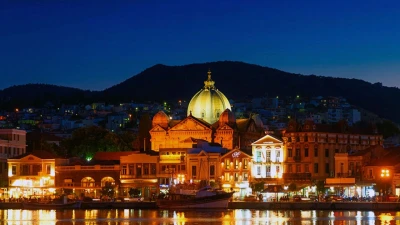
The core of island life is not only beaches and restaurants. The theatre halls in Mytilene, culture centers in settlements like Petra and Kalloni, and events organized in characterful regions such as Plomari and Eresos demonstrate that Mytilene is a living cultural island.
The tour of the “Island of Slaves” play across the island is a symbolic development in this regard. Because cultural events were not limited to the capital Mytilene; they were also transported to different points like Petra, Papados, Plomari, Eresos, Mesotopos, Polychnitos, and Kalloni.
What is "Island of Slaves"?
The Greek title of the play is “Το Νησί των Σκλάβων,” and its Turkish translation is “Island of Slaves.” The work is a classic social comedy written by the French author Pierre de Marivaux. At first glance, it may seem like a humorous play, but beneath the surface lies a strong class critique and sharp observations about human nature.
The core idea of the play is quite striking: After a shipwreck, aristocratic masters and their servants find themselves on a mysterious island. However, in this island, the usual order is reversed. The former slaves now hold positions of authority. The masters who come to the island become slaves, while the slaves become masters.
Through this role reversal, the play questions universal themes such as power, privilege, class, justice, arrogance, empathy, and human relationships. Even after nearly three hundred years, Marivaux's text still opens up a contemporary debate.
Interpretation in Mytilene: A Contemporary View on a Classic Text
The production staged in Mytilene stood out not only by presenting the classic text as a historical work but also by offering a contemporary interpretation that connects it to today's world. Directed by Giannis Tsakonas, the staging adopted an approach that highlighted the political and social aspects of the play.
The local Greek press particularly emphasized that the production was performed with a “new and unexpected ending.” This detail is significant; because the work was reinterpreted not only as a nostalgic classic but also through the lens of contemporary inequalities and power relations.
Such interpretations indicate that the cultural life in Mytilene has a structure with intellectual depth that connects not only locally but also to European theatre traditions.
Show Schedule and Cultural Route Across the Island
According to the program featured in posters and local announcements, the play met with audiences in the Mytilene Municipal Theatre and in various regions of the island. The widespread nature of the program is an important indicator for understanding the cultural mobility of Lesvos.
Date
Region / Venue
Cultural Significance
May 11, 19, 25
Mytilene Municipal Theatre
Main performances in the cultural center of the island, Mytilene
May 14
Petra
A region with a strong tourist and cultural identity in Northern Lesvos
May 17
Papados
A cultural stop intertwined with local life around Gera Bay
May 18
Plomari
An important center known for ouzo culture and coastal life
May 20
Eresos
A region standing out with an alternative lifestyle, nature, and cultural atmosphere
May 22
Mesotopos
The new date announced for the postponed performance
May 23
Polychnitos
A region known for its thermal springs and traditional texture
May 24
Kalloni
An important center for local life and island transportation
The Rise of Cultural Tourism in Mytilene
Cultural tourism transforms a destination from a place merely to be seen into one in which visitors can experience a sense of “living there.” One of Mytilene’s strongest points is this aspect. The island offers not only beautiful views but also a cultural atmosphere that naturally exists within daily life.
Seeing a theatre poster on the streets of Mytilene, coming across a local event in Plomari, experiencing an atmosphere where art and nature intertwine in Eresos, or connecting with local life in Kalloni allows for a relationship beyond a classic holiday experience.
Therefore, Mytilene is an important alternative for Turkish visitors who love Aegean culture, want to stay away from crowded holiday centers, prefer to observe local life, and seek a short but quality trip.
The Theme of Island of Slaves: Power, Equality, and Humanity
The central question of the play is simple yet powerful: What happens to a person when they lose the power they hold? Or when an oppressed person gains power, can they act more justly?
These questions are valid not only for 18th-century France but also for today's world. The play amuses while disturbing the audience, as it holds up a mirror that everyone can see themselves in. The master-slave relationship is not just a historical order; it reappears in many forms of relationships in modern life, such as boss-employee, strong-weak, center-periphery, privileged-excluded.
In this sense, “Island of Slaves” is not just an ordinary theatre play staged in Mytilene but a powerful cultural event that touches the island's intellectual and social life.
A New Reason to Visit Mytilene: Event Tracking
Those planning to travel from Turkey to Mytilene often focus on ferry schedules, hotels, car rentals, and restaurant recommendations. However, including local events in travel plans can make the experience much richer.
Particularly in May, June, July, and August, theatre performances, concerts, village festivals, ouzo events, exhibitions, and outdoor organizations can be followed in Lesvos. Therefore, before going to Mytilene, it is crucial not only to check the weather and ferry times but also to look at the island's cultural calendar.
Content Strategy for GÜVENTUR: How Should This Article Be Used?
This article should not be published on the GÜVENTUR website merely as a news item. For a stronger SEO impact, it should be positioned within the framework of a Mytilene cultural guide. It is recommended to include links to the following pages within the text:
• Mytilene tours homepage
• Dikili - Mytilene ferry ticket page
• Mytilene city guide
• Petra travel guide
• Plomari travel guide
• Eresos travel guide
• Kalloni travel guide
• Mytilene car rental page
• Mytilene hotel and accommodation recommendations
This internal linking structure shows Google that the site is an expert and comprehensive resource on Mytilene. It also doesn’t leave the user in just one article; it guides them to tours, ferries, hotels, car rentals, and regional guides.
Culture and Theatre in Mytilene: The Play "Island of Slaves" Highlighted the Art Life of Lesvos
Mytilene Island welcomes thousands of visitors from Turkey every year as one of the most special routes in the Aegean. For most people, Mytilene means easy access by ferry, beautiful bays, tavernas, ouzo culture, historical villages, and a peaceful island life. However, Lesvos's identity is not limited to vacation and gastronomy. The island also has a strong cultural and artistic life.
The play "Island of Slaves," staged in Mytilene in the spring of 2026, once again made this cultural wealth visible. Pierre de Marivaux's classic was presented to the audience in Mytilene with a contemporary stage interpretation and created a wide cultural impact by being taken to different regions across the island.
A Classic Work, a Current Question
“Island of Slaves” is a play that addresses power relations and social inequalities with a humorous yet profound language. In the story of the play, after a shipwreck, masters and servants find themselves on a mysterious island. But in this island, the roles have changed: masters become slaves, and slaves become masters.
This simple yet effective idea leaves the audience confronted with these questions: When power is in whose hands, can there be justice? How does a person act when they lose their privilege? When the oppressed person gains power, do they behave more justly?
For this reason, the play is not just a historical text but a universal inquiry that also touches today’s world.
The Theatre Tour Across Mytilene
One of the most remarkable aspects of the production in Mytilene was that the play did not remain only in Mytilene city center. Performances were also planned in different regions such as Petra, Papados, Plomari, Eresos, Mesotopos, Polychnitos, and Kalloni, in addition to the Mytilene Municipal Theatre.
This situation demonstrates that cultural activities in Lesvos are not limited to large centers. There is a strong interest in theatre, music, and art across the island. Especially before and during the summer season, these events make visits to Mytilene more meaningful for those who come.
Art in Mytilene, a Part of Daily Life
One of the elements that makes Mytilene special is that culture exists not as a tourist decoration but as a natural part of daily life. Theatre performances attended by the local community, village festivals, music nights, exhibitions, and outdoor activities keep the social fabric of the island vibrant.
In this way, Lesvos conveys a sense of not just being “a place to go,” but rather “a place to live.” This is very valuable for a visitor. Because the travel experience consists not only of places to take pictures but also of the people met, events watched, posters seen on the street, and small local moments participated in.
What Does It Mean for Visitors from Turkey?
For Turkish visitors traveling to Mytilene through Dikili, Ayvalik, or other connections in the Aegean, the island now offers a richer travel experience. Even on day trips, the cultural atmosphere can be felt in the Mytilene city center. In one or two-night stay programs, a much deeper experience of the island can be experienced in regions like Petra, Plomari, Kalloni, Eresos, and Molyvos.
Therefore, when planning a trip to Mytilene, it is essential to consider not only ferry tickets, hotel, and restaurant selections but also the event calendar. Experiences like theatre, concerts, festivals, or local markets add a different meaning to the trip.
Lesvos Holds Strong Potential for Cultural Tourism
Cultural tourism is invaluable for the sustainable promotion of a destination. Sea tourism can be seasonal; however, culture, history, gastronomy, and local life can attract interest throughout the year. Mytilene has a very strong potential in this regard.
The island carries a multi-layered cultural identity from Sappho to Theophilos, from ouzo production to Byzantine and Ottoman traces, from traditional villages to contemporary art events. Theatre activities like “Island of Slaves” showcase the liveliness of this identity today.
Discover Mytilene More Closely with GÜVENTUR
At GÜVENTUR, we prioritize promoting Mytilene not only as a ferry route or a short holiday spot but as a destination with its culture, history, local life, and the spirit that connects both sides of the Aegean.
For support on ferry tickets, accommodation, car rentals, island tours, and special programs for your trip to Mytilene, you can reach out to the GÜVENTUR team. Thus, you will not only see the island but also feel its rhythm of life.
Conclusion: Mytilene, the Living Cultural Island of the Aegean
The play “Island of Slaves” tells more than just a theatrical event staged in Mytilene. This production reveals the living culture of Lesvos, the artistic mobility across the island, and the richness of local life.
For those planning a journey to Mytilene, this is an important message: The island is not just about the sea, food, and views. Mytilene; through its theatre, music, festivals, literature, history, and its people is a true cultural destination.
One of the strongest bonds that can be formed between the two sides of the Aegean is precisely this: shared culture, shared rhythm, and mutual curiosity.
Sources and Useful Links
• Ticket Services - “Το Νησί των Σκλάβων” ticket and event page
• Sto Nisi - Interview/news emphasizing the new and different ending
• Nea Lesvou - Announcement of Mytilene tour
• Aeolos TV - News about the show in Lesvos
• LesvosNews - News about the theatre tour across the island
• Art & Life - Petra performance and ticket information
• Dimokratis - Information about the program, reservations, and Chios performance