

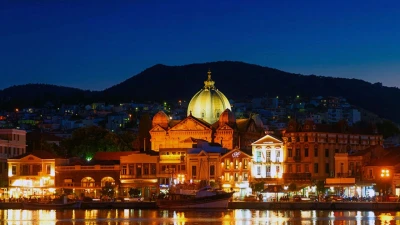


















'Mistegna: The Tradition Rising from the Stones'

30-11-2025 Midilli
'Mistegna: The Tradition Rising from the Stones'

Mistegna: Tradition and Silence

A village on the northeastern coast of Lesbos, away from the crowds, where time flows more slowly…

Mistegna is one of the island's most tranquil stops, with its traditional stone architecture, hills surrounded by olive groves, and the coastal settlement of Skala Mistegnon.


Geographical Location

  • Northeast of Lesbos, approximately 12 km from Mytilene center
  • The main village on the mountainside: Ana Mistegna
  • Coastal settlement: Skala Mistegnon
  • One is a tradition-rich mountain village, the other a summer-populated seaside town


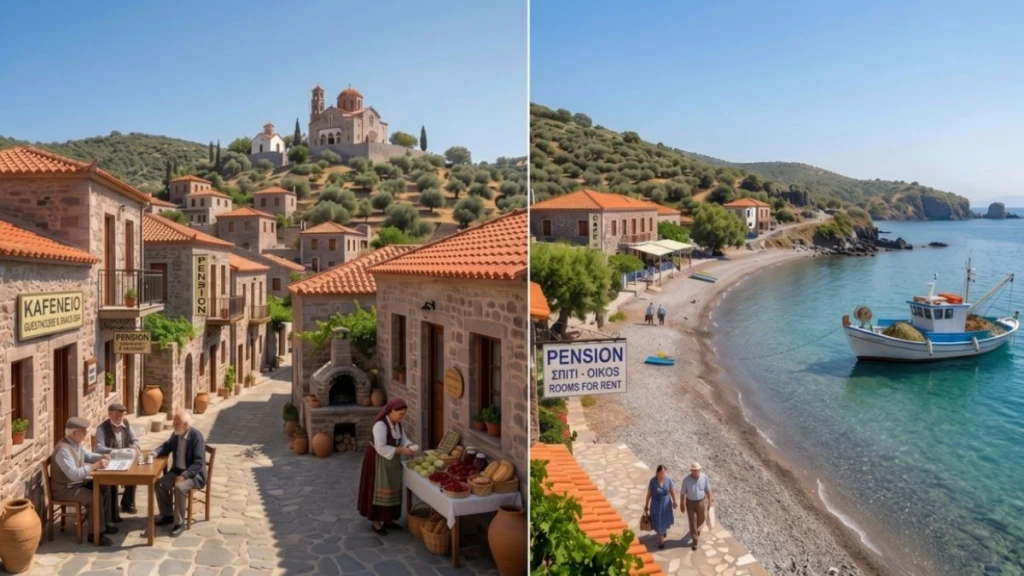
A Village Born of Stone: Architecture and Texture

  • Traditional stone houses of Lesbos
  • Tiled roofs, narrow streets, small courtyards
  • Every house must have a stone oven, olive jar, or pottery
  • A natural landscape surrounded by olive, fig, and almond trees
  • The small coffeehouse (kafeneio) culture and local product market still survive


Daily Life and Cultural Structure

  • The main livelihoods of the people: olive cultivation, agriculture, animal husbandry, fishing
  • The village population increases in summer; there are many expatriates returning from Germany and Australia
  • Women continue to produce bread, olive oil soap, and wine at home
  • Among the elderly, linguistic and cultural features resembling Anatolian Greeks are prominent


Religious Structures and Village Traditions

Mistegna has two important churches:

  • Agios Georgios – village center
  • Panagia – a small chapel on the hill

Religious rituals are still alive in the village:

  • Lighting candles
  • Distributing sacrificial breads
  • Street rites
  • August 15 (Panagia / Dormition of the Virgin Mary festival) is the biggest celebration day


Local Products and Gastronomy

Notable flavors in Mistegna's cuisine:

  • Olive oil-dried tomatoes
  • Homemade goat cheeses
  • Black pepper flavored grape vinegar
  • Kleftiko” (lamb cooked underground in a clay oven)
  • Baked chickpea dish “Revithada

Fish caught in the morning in Skala Mistegnon appears on lunchtime tables the same day; seafood is fresh and natural.


Skala Mistegnon: A Tranquil Coastal Settlement

  • “Skala” means dock or coast in Greek
  • A coastal line with peaceful pensions and family-run establishments that come alive in summer
  • The beach is rocky, but the sea is crystal clear
  • Preferred mostly by locals and expatriates, away from crowded tourist areas

Natural and Geological Structure

  • The region's soil is of volcanic origin
  • This structure gives character to both the olives and the water sources
  • Basalt formations, old paths, and historical wells can be seen
  • Small natural springs can occasionally be found


Final Words

Mistegna is a village where the sounds of the past and nature are heard, not noise.

Stone houses, pathways mixing with olive groves, and Skala's serene shore present the most delicate face of Lesbos.

Anyone visiting Lesbos should definitely spend a day in the narrow streets of Mistegna or the windy coast of Skala. Because this village holds one of the island's purest, most untouched stories.


Our Blog Posts

Our partners

Frequently Asked Questions

Our tours depart from the Dikili Port. Check-in and boarding procedures are carried out at the port by the GÜVENTUR team.
Yes, the door visa is valid throughout the season. It is only issued on the dates determined by the Greek authorities. Documents are submitted for the application following GÜVENTUR's guidance.
You can make an online reservation through our website or quickly create a registration via our WhatsApp line.

Yes, a valid passport is required.

Holders of green passports can enter without a visa.

For holders of red passports, a visa on arrival or Schengen visa is required.

Yes, we offer car rental services in Lesbos through GÜVENTUR. Delivery can be made at the port.
We have daily, 1 night stay and 2 nights stay tour options available.