Lesvos Island (Midilli), draws attention not only with its turquoise sea, stone houses, and historic villages, but also with being one of the Aegean’s strongest gastronomic centers. Thanks to annual gastronomy events, gatherings of local producers, wine tastings, and traditional flavor nights, the island has become one of the shining stars of gastronomic tourism in recent years.
The special culinary event held in Lesvos on the evening of June 19 is one of the best examples of this. At the night that began at 20.00, Lesvos’ famous olive oils, traditional cheeses, natural honeys, and local wines came together, while live music gave guests a true Aegean experience.
🌿 Why Is Lesvos a Gastronomy Island?
Lesvos has a unique culinary heritage shaped by thousands of years of agricultural and trade culture. Olive cultivation, cheese and honey production, winemaking, and seafood traditions dating back to antiquity are an integral part of life on the island.
Located in the northeast of Greece, Lesvos today is home to approximately 11 million olive trees. The island is also one of Greece’s most important ouzo production centers and alone accounts for nearly half of the country’s total ouzo production. However, Lesvos’ true richness lies in the traditional production methods passed down from generation to generation by local producers.
Lesvos’ Four Great Flavor Secrets
- Extra Virgin Olive Oil: Fruity aroma, low acidity, high polyphenols, and the distinctive scent of the Aegean.
- Ladotyri Cheese: A hard and spicy cheese made from sheep’s milk and aged for months in olive oil.
- Natural Honey: Unadulterated pine, thyme, and wildflower notes obtained from rich vegetation.
- Local Wine: Local white, rosé, and red selections from vineyards whose history stretches from antiquity to the present day.
🫒 Liquid Gold: Lesvos Olive Oil and Ladotyri Cheese
On Lesvos, olives are not just an agricultural product; they are a culture, an economy, a family tradition, and a way of life in themselves. The organic extra virgin olive oils produced from local olive varieties grown in the island’s southern regions have won many awards in international competitions.
One of the island’s most famous gastronomic heritage products is undoubtedly Ladotyri Mytilinis cheese. Formed from the combination of the Greek words “Lado” (oil) and “Tyri” (cheese), the name means “cheese kept in olive oil.” Protected under the European Union’s PDO (Protected Designation of Origin) status, this cheese is one of the world’s most distinctive flavors, with excellent aging potential.
🍯 Natural Honeys and Wines in Revival
Lesvos’ mountainous terrain offers exceptional conditions for beekeeping. Family businesses working with traditional methods continue to produce natural pine and thyme honey without any chemical additives. These honeys are served at flavor nights paired with cheese, wine, and olive oil products.
On the island, where wine has been produced since antiquity, the number of small producers has recently begun to rise again. The wine tastings organized offer visitors not only a beverage experience, but also a cultural journey stretching from Byzantium to the Ottoman era.
🎭 Lesvos Food Fest and the Aegean Table Culture
What makes gastronomy events in Lesvos special is the “table culture.” Here, eating is not just about filling the stomach; it means music, conversation, sharing, and friendship.
The main purpose of Lesvos Food Fest, the festival that introduced the island’s gastronomic identity to the world, is exactly this: to support local producers, preserve gastronomic heritage, and pass Aegean culture on to future generations.
Events Included in the Festival:
- Live cooking demonstrations
- Local organic product markets
- Producer meetings and workshops
- Traditional dance and cultural events
🌅 What Is an Evening Like in Lesvos?
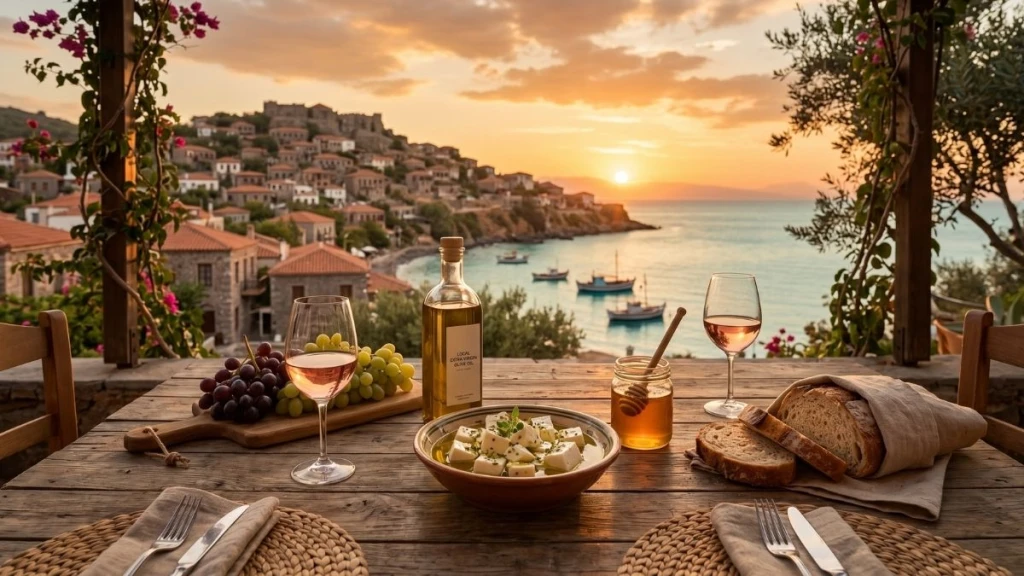
Imagine… As the sun slowly sets over the Aegean Sea, music rises from between the stone houses. On the tables: local olive oil, Ladotyri cheese, natural honey, village bread, seafood meze, and Lesvos wines… On one side, Greek melodies; on the other, the salt-scented breeze of the Aegean…
This is one of the most beautiful living stories of a thousand-year-old culture that brings the two shores of the Aegean together at the same table.
🍽️ A Flavorful Discovery with Güventur
For our guests who want to discover Lesvos’ unique flavors, meet local producers, and join wine and cheese tastings, we at GÜVENTUR continue to bring you the island’s most special routes. Because going to Lesvos is not just an island trip, but also an unforgettable culinary journey.
🌟 AI Image Theme for This Blog
Theme Description:
“The Abundant and Joyful Table of the Aegean.” This visual should directly convey to the reader the warm, intimate, and appetizing atmosphere of an Aegean evening. In the background should be a Lesvos seascape overlooking the sea and a sunset, while in the foreground there should be a wooden, rustic table. On the table should be the main elements mentioned in the blog: olive oil in an elegant bottle, Ladotyri cheese preserved in olive oil, natural honey dripping in a small bowl, fresh grapes, and wine poured into glasses.