



















Yes, a valid passport is required.
Holders of green passports can enter without a visa.
For holders of red passports, a visa on arrival or Schengen visa is required.
Molivos (Mithymna), located in the north of Lesbos Island, is not just a tourism center; it is a unique area where different cultures, religions, and ways of life have coexisted throughout history. During the Ottoman period, both Muslim and Christian communities lived here peacefully, and Bektashi dervishes left important marks on the spiritual identity of the region.
With the passage of Lesbos into Ottoman rule in 1462, Molivos became a strategically significant center for military and trade. Bektashism, which was the spiritual foundation of the Janissary Corps, naturally took root in this region.
Over time, Bektashi dervishes became respected figures of wisdom among both soldiers and the local Greek population. The people referred to them as "those of the light" or "Turkish fathers".
For centuries, Molivos has been a settlement where Greek Orthodox Christians, Muslim Turks, Jews, and various ethnic groups lived together. Bektashism here was not merely a sect but a representation of a culture of tolerance and sharing.
The Greek people regarded Bektashi dervishes as harmonious with nature, tolerant, and generous individuals; especially viticulture and the culture of sharing at the table developed in accordance with the Bektashi understanding.
Historical sources indicate that there was a Bektashi lodge in Molivos dating back to the late 16th century.
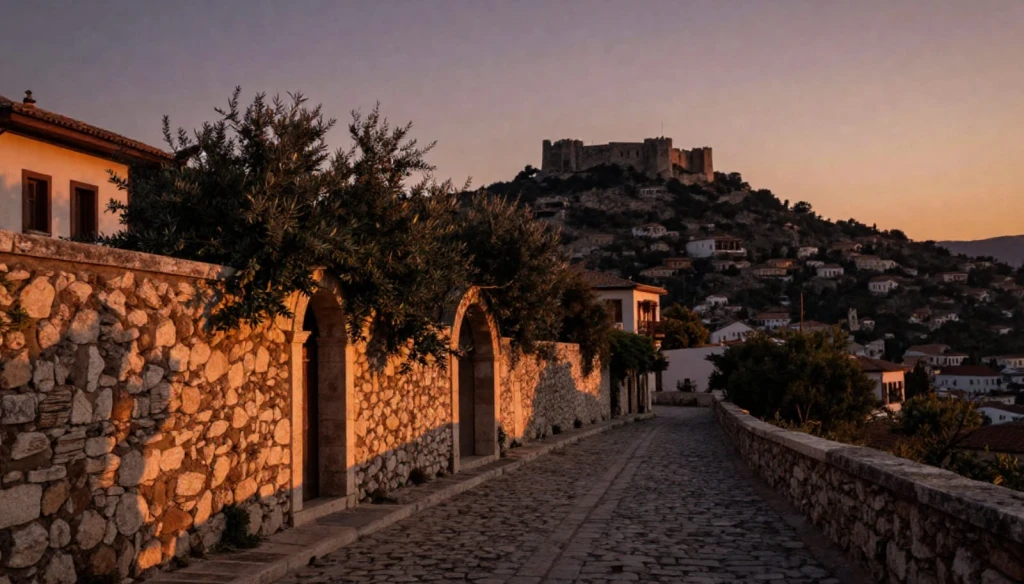
Although the exact location of the lodge is not known, it is believed to have been near the old Turkish neighborhood at the foot of the castle. This site, known among the people as "Tekke Hill" or "Dervish House," served as a spiritual center for a long time.
Bektashi dervishes prayed here and assisted the local population. Over time, the lodge became a place of visitation for people of different beliefs as well.
During the Ottoman period, a mosque, lodge, bathhouse, church, and synagogue were all located in the same area of Molivos. This multicultural structure strengthened the socio-cultural fabric of the island.
The nature-harmonious and tolerant structure of Bektashi teachings occasionally intertwined with the traditions of the Greek people. Traces of this interaction can be seen in practices such as the fertility prayers held before the harvest and the rituals performed at water sources.
Although there is no active Bektashi lodge today, traces of this past can still be felt in the old streets of Molivos.
The old Turkish neighborhood around the castle was once the center of this spiritual tradition.
The ruins of old mosques, Arabic inscriptions, stone carvings, and gravestones continue to exist as silent witnesses of this culture. Some elderly Greek residents still recount, “once there were dervishes who shone light here,” giving voice to the past.
The culture of Molivos still carries the traces of Bektashi philosophy today.
The understanding of living in harmony with nature, approaching people with love, and respecting different beliefs is felt in the daily life of the island.
The tranquility of olive groves, the tables set in the vineyards, and the calmness at sunset; all of these embody the continuation of the culture of tolerance that shapes the spirit of this region.
Bektashism has transcended being merely a historical institution in Molivos, transforming into a living philosophy that is embedded in the island's identity.
Today, even the winds that breeze through this land remind us of the understanding to “love people, protect nature, and not separate anyone.”
Molivos continues to carry the past into the present as one of the spiritual bridges of the Aegean.
Yes, a valid passport is required.
Holders of green passports can enter without a visa.
For holders of red passports, a visa on arrival or Schengen visa is required.