




















'Midilli (Mytilini Directorate) Castle, the Silent Guardian of the Aegean'

30-11-2025 Midilli
'Midilli (Mytilini Directorate) Castle, the Silent Guardian of the Aegean'

Mytilini (Mudislik) Castle

The Silent Guardian of the Aegean

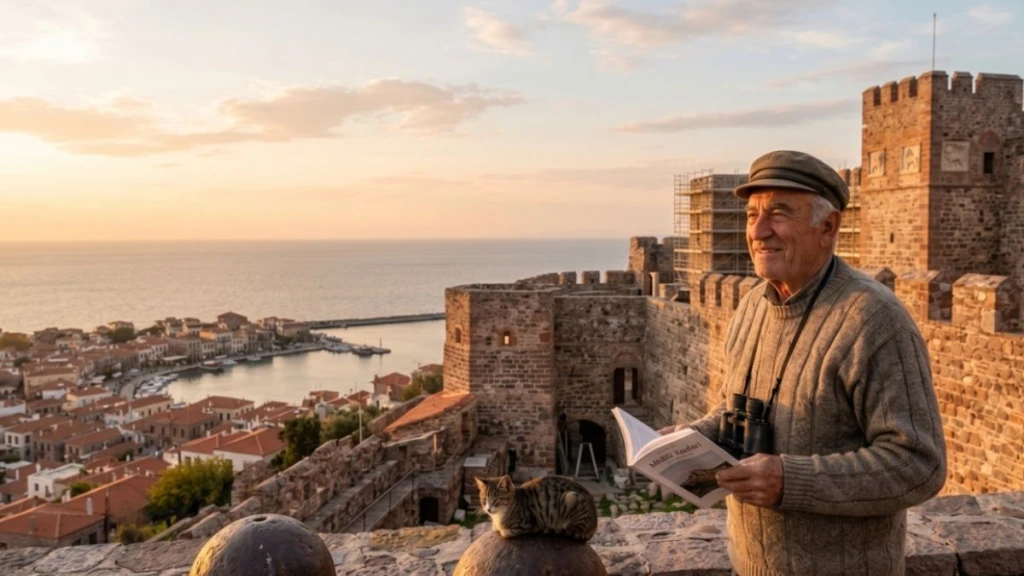
Perched on a high hill in the northeast of Mytilini city, where the sea meets the sky, Mytilini Castle (known as Mudislik Castle during the Ottoman period) is one of the most important structures that have shaped the island's destiny for centuries.

Thanks to its strategic location, it has protected both the port and the city, becoming one of the strongest defense centers of its time.


1. Strategic Location

The castle is built on a peninsula that completely controls the entrance to Mytilene.

  • Port and city panorama
  • Monitoring sea entry and exit
  • Used as a military and administrative center

Even today, the entire city can be seen from above in a bird's-eye view.


2. Historical Development: From Byzantine to Ottoman

Byzantine Period (6th Century)

The initial foundations date back to the reign of Emperor Justinian.

Purpose: Defense against pirate attacks.

Genoese – Gattilusio Period (1355–1462)

The Gattilusio family rebuilt the castle, adding high walls and observation towers.

Today, Genoese lion reliefs can still be seen.

Ottoman Period (1462–1912)

With the conquest of the island by Fatih Sultan Mehmet in 1462, the castle was named "Mudislik."

The Ottomans added the following to the castle:

  • Artillery towers
  • Garrison buildings
  • Mosque and bath
  • Arsenals
  • Water cisterns

During this period, the castle became both a military and administrative center.


3. Ottoman Conquest: A Strategic But Bloodless Victory

In 1462, Fatih Sultan Mehmet besieged Mytilini to stop Genoese pirate activities.

The conquest process:

  • Naval blockade
  • Siege with land forces
  • Bombardment of the walls with long-range cannons
  • Guarantee that the public would not be harmed during surrender

Result: The castle passed to the Ottomans with minimal loss.


4. Castle Architecture

The castle consists of three defense rings:

Upper Castle (Acropolis)

The oldest and highest part. Observation and administration area.

Middle Castle

Towers and walls from the Gattilusio period are located here.

Lower Castle

Prisons, storage areas, and arsenals from the Ottoman period are found in this section.

General Architectural Features

  • Stone-brick mixed wall construction
  • Large cisterns
  • Remains of Ottoman mosque
  • Towered wall system
  • Tunnels and underground passages

Defense and aesthetics are intertwined in the structure.


5. The Place of the Castle in Greek Sources

According to Greek historians, Mytilini Castle:

  • “One of the largest medieval castles in the Mediterranean”
  • A multi-layered cultural heritage
  • Traces of the Latin influence of Gattilusio
  • An important representative of Ottoman architecture
  • The first refuge of Anatolian Greeks after 1922
  • A venue for concerts and theater today

6. Restoration and Future Projects

Recent Works (2023–2025)

  • 15 million € budget supported by the EU
  • Reinforcement of the northern walls
  • Opening of underground galleries
  • Restoration of Saplitza storage buildings
  • Establishment of a digital guide and navigation system

Planned Projects

  • Archaeology laboratory
  • Excavation site exhibition center
  • Cultural event area in the lower castle
  • Accessibility for disabled visitors

The castle is being reimagined as an “open-air history museum.”


7. Visitor Information

  • Visit duration: 1 – 1.5 hours
  • Entrance: Generally free
  • Recommendations:
  • Panoramic view from the upper castle
  • Ottoman cannon and inscriptions
  • Exploration of restoration areas
  • Photography at sunset


Final Words: A Journey Through Time in the Castle of Aegean

Mudislik Castle is a shared memory space in both Turkish and Greek histories.

Each period has left its mark; today the castle is a cultural meeting point.

A visitor to this castle senses not only the stone walls but also the millennia-old spirit of the Aegean.


Our Blog Posts

Our partners

Frequently Asked Questions

Our tours depart from the Dikili Port. Check-in and boarding procedures are carried out at the port by the GÜVENTUR team.
Yes, the door visa is valid throughout the season. It is only issued on the dates determined by the Greek authorities. Documents are submitted for the application following GÜVENTUR's guidance.
You can make an online reservation through our website or quickly create a registration via our WhatsApp line.

Yes, a valid passport is required.

Holders of green passports can enter without a visa.

For holders of red passports, a visa on arrival or Schengen visa is required.

Yes, we offer car rental services in Lesbos through GÜVENTUR. Delivery can be made at the port.
We have daily, 1 night stay and 2 nights stay tour options available.