



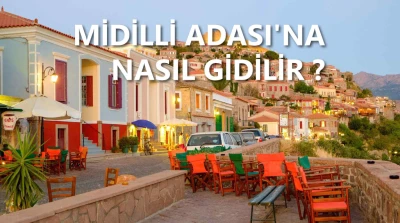












GÜVENTUR offers Lesvos tours and ferry services from Dikili, Ayvalık, Akçay and Aliağa. Available departure ports and sailing times vary by season and programme; check the details of your chosen trip before booking.
Options include day trips, 2 days / 1 night and 3 days / 2 nights. Please be at the port at least one hour before departure for check-in and passport procedures, and follow any earlier reporting time stated on your ticket.
The Greek island facilitated-entry visa scheme is intended for eligible Turkish citizens travelling by sea from Türkiye to participating Greek islands. It requires an application and approval; it is not a visa that every traveller can obtain simply by arriving at the port.
Contact GÜVENTUR before booking to confirm whether the scheme is operating for your travel dates, the permitted stay, fees, required documents and submission deadline. Prepare your passport copy, biometric photographs, financial documents, return ferry booking and accommodation details as requested. Entry remains subject to the Greek authorities’ decision.
Browse the Lesvos tours or ferry tickets on the GÜVENTUR website. Open the product details, choose an available date and departure port, and review the programme, inclusions and conditions before completing your booking.
For help choosing a trip or checking availability, contact GÜVENTUR through the website’s contact or WhatsApp options. Your booking confirmation will include the relevant travel and document instructions.
The file generally includes a valid passport and copy, recent biometric photographs, the completed and signed application form, financial documents, a return ferry booking and accommodation confirmation. Additional documents may be required for your circumstances.
Ask GÜVENTUR for the current checklist and submission deadline before preparing your file. Passport validity, blank pages, photograph requirements and supporting documents must meet the Greek authorities’ current rules. Submitting documents does not guarantee visa approval or entry.
Travellers must carry a valid passport and meet the entry requirements applicable to their nationality and passport type. Turkish citizens holding ordinary passports generally need a valid Schengen visa or an approved visa under the Greek island facilitated-entry scheme, where available.
Visa exemptions apply to certain Turkish special, service and diplomatic passport holders. These rules do not apply automatically to travellers of other nationalities. Confirm your eligibility and current document requirements before booking; GÜVENTUR can assist with document checks and the application process.
GÜVENTUR can help arrange car rental on Lesvos. Port or hotel collection may be available, depending on the rental company, vehicle availability and your booking.
Book in advance, especially in busy periods. Before confirming, check the accepted driving licence, minimum age, deposit, insurance, collection point and return conditions with the rental provider. Turkish-language support is available through GÜVENTUR.
GÜVENTUR offers day trips, 2-day tours with 1 night and 3-day tours with 2 nights on Lesvos. Day trips usually return on the same day; overnight programmes allow more time to explore the island.
Depending on the itinerary, visits may include Molyvos, Petra, Plomari or Agiasos. Not every programme visits every destination. Check the selected tour page for the exact itinerary, accommodation, departure times and included services.
Children and infants need their own valid travel documents and must be included in the ferry booking. Visa requirements depend on the child’s nationality and passport type; being a child does not by itself create a visa exemption.
Child and infant fares, age limits and any visa-related charges vary by operator and programme. Check the selected trip and contact GÜVENTUR about the documents needed for minors, including any consent or accompanying-adult requirements.
