Getting to know the Aegean islands is not only about exploring their beaches, stone streets, and historic villages. Local cuisines, small producers, and island-specific products also complete the cultural side of the journey. Greece’s small-scale beer production, which has developed in recent years, is one of the notable examples of this gastronomic diversity.
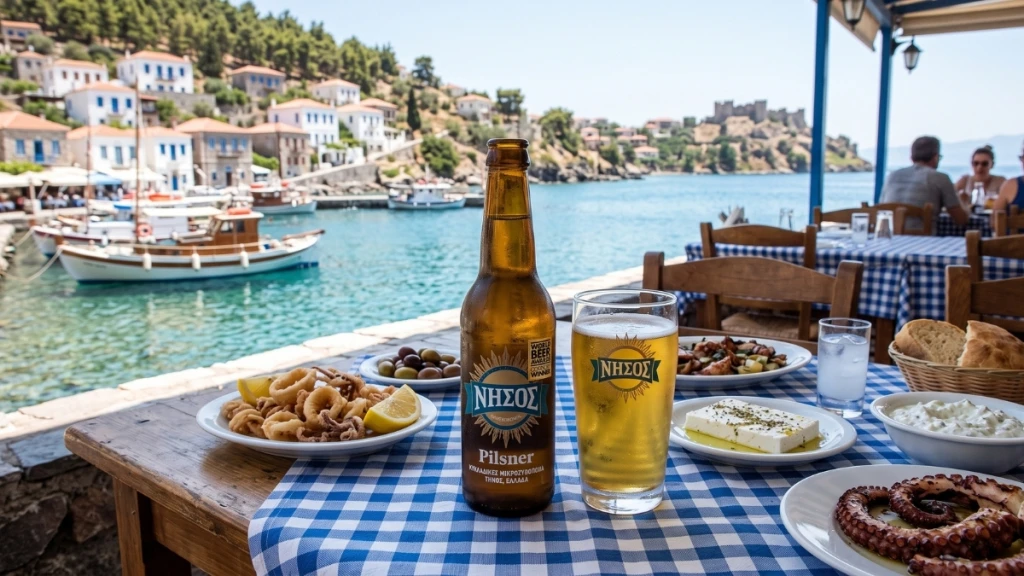
The NISSOS Pilsner seen in the photograph takes its name from the Greek word νήσος – nissos, meaning “island.” The product is known as one of the first and most recognized varieties of a Greek beer brand founded on Tinos Island, one of the Cycladic Islands.
An island brand born on Tinos Island
Tinos is one of the Cycladic islands known for its white houses, marble craftsmanship, traditional villages, and strong gastronomic culture. The story of the NISSOS brand also began in this island setting, with a contemporary production concept carrying a local character.
From the brand name to the bottle design, it is possible to see the Aegean’s primary colors in the visual language used: golden tones reminiscent of the sun, blue details representing the sea, and a simple design evoking island life.
It is also important to note a key detail here: NISSOS is not a local beer produced in Lesvos. Its production origin is Tinos Island. However, because it is distributed in different regions of Greece, it may appear seasonally at some restaurants, tavernas, and points of sale in Lesvos. Availability may vary depending on the season, establishment, and distribution conditions.
Characteristics of NISSOS Pilsner
NISSOS Pilsner is technically considered a pilsner close to the Czech or Bohemian style. The product, which has an alcohol content of 5%, is generally characterized by the following features:
- Golden-yellow and clear appearance
- Medium body with a pronounced grain and malt character
- Herbal touches from aromatic hops
- A balanced structure between malt sweetness and hop bitterness
- A clean and distinct finish
According to the producer’s information, 100 milliliters contain approximately 40 kcal of energy, 2.4 grams of carbohydrates, and 0.3 grams of sugar. The basic ingredients of brewing—water, malt, hops, and yeast—are used in production.
NISSOS Pilsner received the “Country Winner” distinction for Greece in the 2025 World Beer Awards. The competition’s tasting notes highlight its clear golden color, lasting head, subtle hints of pear and nuts, and pronounced hop character.
Its place in Aegean cuisine
Food culture on the Greek islands is generally built around long meals and sharing. Fish varieties, calamari, octopus, mussels, meze, local cheeses, dishes prepared with olive oil, and grilled foods are the main components of these tables.
Pilsner-style beers are also among the beverage options preferred alongside light and moderately rich island dishes. The real experience here comes not only from a single item on the table, but from the whole created by the sea view, the atmosphere of the taverna, local recipes, and conversation.
NISSOS’s name, meaning “island,” naturally establishes a connection with the Aegean geography for this reason. The golden and blue tones seen on the bottle create a design language that evokes the sunny shores and clear sea of the Aegean.
Can you encounter it in Lesvos?
Although ouzo culture is more dominant in Lesvos’s gastronomic world, it is also possible to come across beer brands produced in different regions of Greece on the island. NISSOS Pilsner may be available seasonally among the product options at some restaurants, cafés, tavernas, and points of sale, particularly in tourist centers.
However, it should not be assumed that it is served continuously at a particular establishment. Product selections vary depending on seasonal demand, the supplier, and the establishment’s menu preferences. In tourist areas such as Mytilene, Plomari, Petra, Molyvos, and Skala Eresou, menus may sometimes offer a wider range of options.
More than a bottle: an island story
Local or regional products we encounter while traveling help us understand the economic and cultural story of the geography we visit. The fact that NISSOS, born in Tinos, also appears on other Aegean islands is a small but interesting example of the gastronomic interaction between the Greek islands.
During your trip to Lesvos, pay attention not only to the places to see, but also to bakeries, varieties of cheese, olive oils, seafood, and products from different islands. Because one of the best ways to truly get to know the Aegean is to discover its daily life and table culture.