





















tsipouro

13-07-2026 Midilli
tsipouro

TSIPOURO


Greece’s Traditional Drink Made from Grapes

Its history, production, culture, varieties, and differences from Turkish rakı

Prepared by: GüvenTravel Content Study

Tsipouro in one sentence

A traditional Greek grape distillate made by distilling fermented grape pomace left over from wine production, available in plain, anise-flavored, or oak-aged varieties.


What Is Tsipouro?

When Greece is mentioned, ouzo often comes to mind. Yet one of the drinks that most strongly represents the country’s viticulture, village life, and long meze tables is tsipouro. Made by fermenting and distilling grape pomace, this drink is not merely a high-alcohol product; it is a cultural symbol of the grape harvest, hospitality, and the shared table.

“Tsipouro is a drink that makes it possible to use the part left behind after grapes are turned into wine, carrying centuries of economic and social knowledge.”

Contents

1. Tsipouro’s raw material and production process

2. Historical origins: Byzantium, Mount Athos, and the Ottoman lands

3. Varieties of tsipouro

4. Differences between ouzo, Turkish rakı, grappa, and tsikoudia

5. Regional culture in Greece

6. How is it served and what is it consumed with?

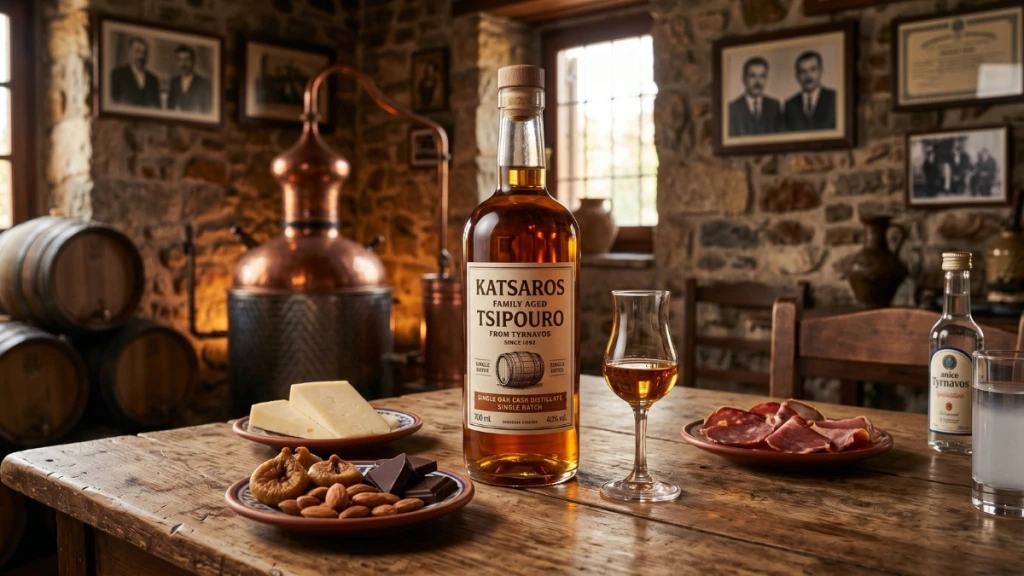
7. Katsaros Aged Tsipouro in the photograph

8. Safe product selection and conclusion

1. Raw Material and Production Process

Tsipouro is obtained by fermenting and distilling the grape pomace left after wine production—skins, seeds, pulp, yeast residues, and a small amount of must. This raw material is referred to in European distilled-spirit terminology as “grape marc” or “grape pomace.”

Stage

What happens?

2. The History of Tsipouro

Ancient narrative: cultural roots exist, but direct evidence is limited

Grapes, wine, and fermented drinks held a central place in the ancient Greek world. However, there is no continuous, strong chain of evidence showing that tsipouro, made by distilling grape pomace, was produced in antiquity using the same method and name as today. Therefore, the phrase “ancient Greek drink” may describe cultural continuity, but it should not technically be considered the definite beginning of modern tsipouro.

The 14th century and Mount Athos

The most common account in official Greek tourism sources is that tsipouro production became established around the 14th century in Orthodox monasteries on Mount Athos. It is believed that monks who made wine fermented and distilled the grape pomace instead of discarding it; the technique later spread to Macedonia, Epirus, and Thessaly. This is a strong traditional belief, although most sources present it as “it is believed” rather than as a definitive archival record.

From Byzantium to the Ottoman lands

The 14th century was politically the final period of Byzantium. From the 15th century onward, most regions where tsipouro was produced came under Ottoman rule. Viticulture and distillation culture did not disappear; they continued to develop throughout the Balkans, the Aegean islands, Anatolia, and the Eastern Mediterranean through the production knowledge of different communities.

Our Blog Posts

Our partners

Frequently Asked Questions

Our tours depart from the Dikili Port. Check-in and boarding procedures are carried out at the port by the GÜVENTUR team.
Yes, the door visa is valid throughout the season. It is only issued on the dates determined by the Greek authorities. Documents are submitted for the application following GÜVENTUR's guidance.
You can make an online reservation through our website or quickly create a registration via our WhatsApp line.

Yes, a valid passport is required.

Holders of green passports can enter without a visa.

For holders of red passports, a visa on arrival or Schengen visa is required.

Yes, we offer car rental services in Lesbos through GÜVENTUR. Delivery can be made at the port.
We have daily, 1 night stay and 2 nights stay tour options available.